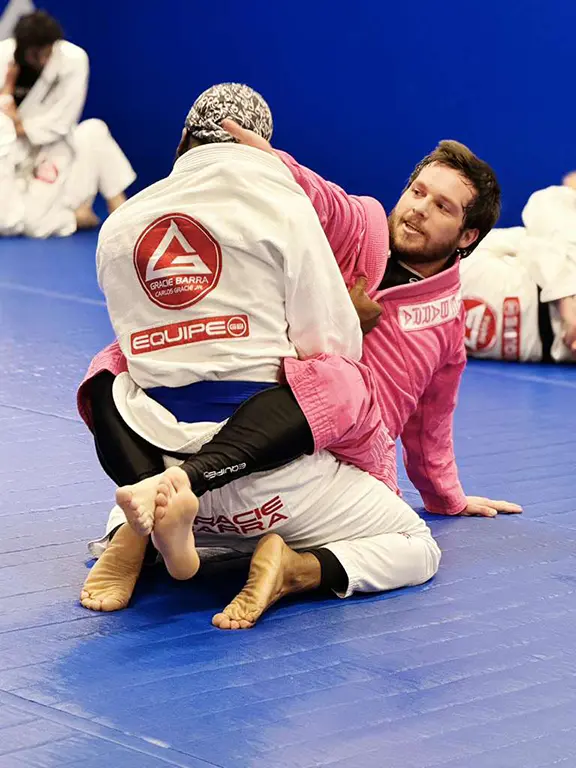
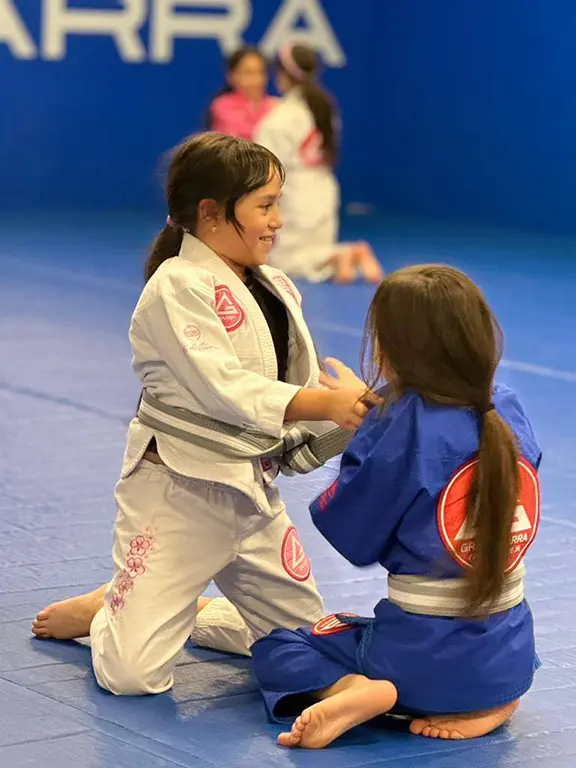
Blog

  • Your First Jiu-Jitsu Class: Exactly What Happens

    Hi, I’m Professor Valerio Ubaldini, head professor at Gracie Barra Denver.

    Most people who want to try Brazilian Jiu-Jitsu wait months before they actually walk in. Not because of the training — because of the unknown. What do I wear? Will everyone stare at me? What if I’m terrible?

    So let me remove the unknown entirely. Here’s exactly what your first class looks like, minute by minute.

    Before You Arrive

    What to wear

    Athletic clothes with no zippers, buttons, or pockets. Zippers cut people and pockets catch fingers — that’s the only reason for the rule.

    Shorts and a t-shirt work. Leggings and a fitted top work. Rash guard if you have one; if you don’t, a normal t-shirt is fine.

    You do not need to buy a gi. We’ll lend you one for your trial class. Buying a gi before you know if you like the sport is the most common waste of money in Jiu-Jitsu.

    What to bring

    • A water bottle
    • Flip-flops or slides if you have them (for walking off the mat)
    • Nothing else

    Two things to do beforehand

    Trim your nails — fingers and toes. This is the single most enforced hygiene rule in Jiu-Jitsu, because long nails scratch training partners.

    Eat light, or not at all, in the hour before. A full stomach and someone’s weight on your ribs don’t combine well.

    Leave the jewelry at home

    Rings, earrings, necklaces, watches all come off. Easier to leave them in the car than to keep track of them.

    The First Ten Minutes

    Arrive ten minutes early. This is genuinely important — not because we’re strict about time, but because those ten minutes are when I introduce myself, show you where things are, and answer questions without the class waiting.

    Here’s what happens:

    1. Someone greets you at the front desk and you fill out a short waiver.
    2. You get changed. We’ll hand you a loaner gi and show you how to tie the belt — everyone needs to be shown; it’s not obvious.
    3. Shoes come off before you step near the mat. This is universal in Jiu-Jitsu: shoes never touch the mat, and bare feet never touch the bathroom floor.
    4. I’ll introduce you to a few students and assign you a training partner for the class — usually an experienced student whose job is to look after you.

    You will not be left standing alone wondering what to do. If a school does leave you standing alone, that tells you something about the school.

    The Class Itself

    A typical fundamentals class runs about an hour and follows the same shape every time.

    Warm-up (10 minutes)

    Movement drills specific to Jiu-Jitsu — shrimping, bridging, rolling backward and forward. These look strange the first time. They’re the base movements of everything you’ll learn later.

    You can scale anything. Nobody expects a first-timer to keep pace.

    Technique instruction (20–25 minutes)

    I demonstrate a technique, break it into steps, then you drill it with your partner. You’ll each do it several times, slowly, while I move around correcting.

    You will not remember it. Let me say that clearly, because it’s the thing beginners are most self-conscious about. Your brain is processing an enormous amount of new information and there’s no capacity left for retention. It comes back around — the curriculum cycles.

    Your partner will help you. That’s expected of them, and it’s how the room works.

    Positional drilling (10 minutes)

    Starting from a specific position and working a single objective — escape this pin, hold this position. Lower pressure than full sparring, and this is where beginners learn fastest.

    Live training, or “rolling” (10–15 minutes)

    Rounds of five to six minutes against a partner who is actively resisting.

    As a first-timer, you have two options and both are completely normal: roll with an upper belt who will guide you, or sit out and watch. Nobody will pressure you either way. Plenty of people sit out on day one.

    If you do roll, the only rule you need is this: tap when you’re caught. Two clear taps on your partner, or say “tap” out loud. The round stops instantly, no explanation needed, no judgment attached. You can also tap for any other reason — you’re tired, you’re uncomfortable, something feels wrong. It always works.

    Bow out and closing (2 minutes)

    The class lines up, we bow, and that’s it. Someone will probably ask how it went. Someone else will probably introduce themselves.

    What It’s Actually Going to Feel Like

    I’d rather you know this in advance than be surprised.

    You’ll be more tired than you expect. Jiu-Jitsu fatigue is a different currency from running or lifting — it’s grip, breath, and the constant low-level effort of managing weight. Add Denver’s altitude and the first class is humbling regardless of your fitness level. It gets much better in four to six weeks.

    You’ll be sore in strange places. Neck, forearms, and hips are the usual suspects. It fades after the first few sessions.

    You’ll feel awkward and out of place. Everyone does. The black belt teaching you felt exactly the same way once.

    Someone smaller will control you completely. This is the moment that makes most people come back. It’s the clearest possible demonstration that this is about technique, not size.

    Nobody is judging you. I know that’s what people always say. But specifically: everyone in that room was a nervous beginner, most of them recently. The room is genuinely happy you showed up.

    Mat Etiquette in One List

    Everything you need to know to not accidentally break a rule:

    • Shoes off before stepping on the mat; sandals on when you leave it
    • Bow when entering and leaving the mat
    • Clean gi, clean body, trimmed nails, every session
    • No jewelry
    • Tap early — there is no benefit to holding out
    • If you have an injury or condition, tell your partner and the instructor before the round
    • Walk around a pair who are training, not between them
    • If someone taps, release immediately
    • Don’t coach other students — that’s the instructor’s job

    Nobody expects you to know all of this on day one. You’ll be told what you need to know as you go.

    After Your First Class

    Give it three classes before you decide anything.

    The first is sensory overload. The second, you can follow the structure. By the third, you’ll have some idea whether you like it — and that’s a much more reliable read than one session.

    If you want a longer look at what the first months hold, we wrote about what nobody tells you about being a white belt.

    And if you’re still comparing academies, our guide to choosing a BJJ school in Denver lays out what to look for — including how to tell a well-run room from a badly run one.

    Book Your Free First Class in Denver

    Your first class at Gracie Barra Denver is free. It’s an actual class, not a sales tour — you’ll train, and then you’ll go home and think about it.

    We serve Denver and the surrounding Colorado communities from [Studio Address]. Beginner classes run [confirm: horários das turmas de fundamentos].

    Bring athletic clothes with no zippers or pockets, a water bottle, and short nails. We’ll handle the rest.

    [Book your free class here]([Booking Link]) or call [Phone].

    — Prof. Valerio Ubaldini, Gracie Barra Denver

    Frequently Asked Questions About Your First BJJ Class

    What should I wear to my first Jiu-Jitsu class?

    Athletic clothing with no zippers, buttons, or pockets — shorts and a t-shirt, or leggings and a fitted top. Bring a water bottle and trim your nails. Most academies, including Gracie Barra Denver, lend you a gi for the trial class.

    Do I need to buy a gi before my first class?

    No. Wait until you’ve decided you’re continuing. Trial students are lent a gi, and buying one early is the most common wasted purchase in Jiu-Jitsu.

    Will I have to spar on my first day?

    Only if you want to. Beginners are welcome to sit out live training entirely, or to roll with an experienced upper belt who will guide the round. Both are completely normal.

    How long is a Jiu-Jitsu class?

    Usually about an hour: warm-up, technique instruction, positional drilling, then live training. Fundamentals classes tend to weight the technique and drilling portions more heavily.

    What if I’m not in shape?

    That’s the normal starting condition. Every part of class is scalable, and beginners are expected to rest when they need to. Conditioning improves noticeably within the first month or two.

    Is it normal to feel lost in your first class?

    Completely. First-time students typically retain very little of the technique taught, because attention is spent on staying calm and following along. The curriculum cycles, so everything comes back around.

    How do I tap in Jiu-Jitsu?

    Tap your partner clearly two or more times with your hand, or say “tap” out loud. The round stops immediately. You can tap for any reason at all, including simply being tired or uncomfortable.
  • What Is Gracie Barra? The Method Behind the Red Shield

    Hi, I’m Professor Valerio Ubaldini, head professor at Gracie Barra Denver.

    If you’ve looked at Brazilian Jiu-Jitsu schools in Colorado, you’ve probably seen the red shield. You may also have noticed that the same shield appears on academies in Salt Lake City, São Paulo, London, and Dubai.

    So the reasonable question is: what is Gracie Barra, actually? A franchise? A team? A style?

    The short answer: it’s a global Jiu-Jitsu organization with a standardized teaching method, and the shield is a promise that the method is the same wherever you see it.

    Here’s what that means in practice.

    Where Gracie Barra Came From

    Gracie Barra was founded in 1986 by Carlos Gracie Jr. in Barra da Tijuca, Rio de Janeiro — the neighborhood the school takes its name from.

    Carlos Gracie Jr., known throughout the sport as Master Carlos, is the son of Carlos Gracie Sr., one of the founders of Brazilian Jiu-Jitsu itself. He’s also the founder of the IBJJF, the organization that runs the world’s largest Jiu-Jitsu competitions.

    What made Gracie Barra different from the start wasn’t a new technique. It was an idea about access: that Jiu-Jitsu shouldn’t be reserved for young athletes. The motto — Jiu-Jitsu for Everyone — is the actual operating principle of the organization, and it’s why a Gracie Barra mat has 50-year-old beginners next to competitors next to seven-year-olds.

    From that single school in Rio, the organization now runs 1,300+ schools worldwide.

    We tell the fuller story, including how the lineage reached Colorado, in the history of Gracie Barra.

    What Makes a Gracie Barra School Different

    This is the part that actually affects you as a student.

    The curriculum is standardized worldwide

    Most Brazilian Jiu-Jitsu academies teach whatever the head instructor decides to teach. Quality varies enormously as a result — sometimes brilliant, sometimes chaotic, and always dependent on one person.

    Gracie Barra schools teach a defined curriculum, developed and refined by Master Carlos Gracie Jr. over more than forty years. Techniques are taught in sequence, on a cycle, with each level building on the one before.

    Practically, this means three things for you:

    • You always know what you’re working on. There’s a structure, and you can see where you are in it.
    • Gaps don’t stay hidden. In an unstructured school you can train for two years and never learn a fundamental escape because it never came up. Here, the cycle covers it.
    • Missing classes is recoverable. You know exactly what you missed and when it comes around again.

    Classes are organized by level, not thrown together

    The program structure separates students by experience:

    • GB1 — Fundamentals. Where every adult beginner starts. Core positions, escapes, and self-defense concepts, taught with people at your level.
    • GB2 — Advanced. Open once you have the fundamentals. Deeper technical work and more live training.
    • GB3 — Elite. For advanced students and competitors.
    • GB Kids. The children’s program, grouped by age, with the curriculum adapted for developing bodies.

    The GB1 separation matters more than anything else on this list. Most people who quit Jiu-Jitsu quit because they were dropped into an advanced room in week one. Gracie Barra’s structure is specifically designed to prevent that.

    Instructors are certified, not just promoted

    Being a black belt makes you good at Jiu-Jitsu. It doesn’t automatically make you good at teaching it — those are genuinely different skills.

    Gracie Barra runs a formal instructor certification program through the Gracie Barra Institute, where instructors are trained in the curriculum, in teaching methodology, and in how to run a class safely. Certification is a requirement for leading a Gracie Barra school, not an optional credential.

    That’s why the shield means something. It’s a standard being enforced, not a logo being licensed.

    Self-defense is part of the curriculum, not an add-on

    Many schools have drifted toward Jiu-Jitsu as a sport, with self-defense taught occasionally as a seminar.

    Gracie Barra keeps self-defense in the core curriculum — grip escapes, standing defense, getting back to your feet. It’s the reason many Gracie Barra schools carry “Brazilian Jiu-Jitsu & Self-Defense” in their name. We go deeper on this in does Jiu-Jitsu really work for self-defense.

    Competition is available and optional

    Gracie Barra runs its own competition circuit, CompNet, designed as an accessible on-ramp — you compete against people from within the organization, in a lower-pressure format than a major open tournament.

    I want to be clear about the positioning, because students ask: competing is not required. Most of our students never compete. It’s there if you want the experience, and it costs you nothing to ignore it.

    Your membership travels

    Because the curriculum and standards are consistent, you can train at Gracie Barra schools around the world. Walk into a GB academy in another city and the warm-up, the structure, and the terminology will be familiar.

    For anyone who travels for work, this is a genuinely useful benefit — you don’t lose momentum for two weeks every time you’re out of town.

    Gracie Barra in Colorado

    Gracie Barra has a real presence across Colorado, including schools in the Denver metro and along the Front Range. Each is independently operated but teaches the same certified curriculum under the same standards.

    Gracie Barra Denver serves Denver and the surrounding Colorado communities from [Studio Address]. We run [confirm: programas oferecidos — adults, kids, women’s, no-gi] with [confirm: número de aulas semanais].

    If you’re looking for a Gracie Barra school elsewhere in Colorado, the official school directory at graciebarra.com lists every certified location.

    Common Questions About the Gracie Barra Name

    Is Gracie Barra the same as Gracie Jiu-Jitsu?

    Related, but not the same. Both trace back to the Gracie family, and Gracie Barra was founded by a member of that family. But there are several distinct Gracie organizations with different curricula, standards, and leadership. Gracie Barra is its own organization with its own method and certification system.

    Is Gracie Barra a franchise?

    It’s closer to an affiliation with enforced standards. Schools are independently owned and operated, but they must meet requirements around curriculum, instructor certification, and facility standards to carry the name and the shield.

    What does the red shield mean?

    The shield is the Gracie Barra emblem, and the red is drawn from the organization’s identity in Rio. Beyond the visual, it signals that the school meets the organization’s standards for curriculum and certified instruction.

    Come See What the Standard Looks Like

    The fastest way to understand any of this is to spend an hour in a class.

    Your first class at Gracie Barra Denver is free. You’ll see the GB1 structure, meet the room, and get a feel for whether the method suits how you learn. No obligation, no sales pitch.

    Wear athletic clothes with no zippers or pockets, bring water, and arrive ten minutes early — we’ll lend you a gi.

    [Book your free class here]([Booking Link]) or call [Phone].

    — Prof. Valerio Ubaldini, Gracie Barra Denver

    Frequently Asked Questions About Gracie Barra

    What is Gracie Barra?

    Gracie Barra is a global Brazilian Jiu-Jitsu organization founded by Carlos Gracie Jr. in 1986 in Barra da Tijuca, Rio de Janeiro. It operates 1,300+ schools worldwide, all teaching a standardized curriculum through certified instructors.

    Who founded Gracie Barra?

    Master Carlos Gracie Jr., son of Carlos Gracie Sr. and founder of the IBJJF. He developed and has refined the Gracie Barra curriculum over more than forty years.

    What is the Gracie Barra Institute?

    The Gracie Barra Institute is the organization’s instructor training and certification program. It trains instructors in the curriculum and in teaching methodology, and certification is required to lead a Gracie Barra school.

    What are GB1, GB2 and GB3?

    They’re the levels of the adult program. GB1 is Fundamentals, where all beginners start. GB2 is Advanced, opened once the fundamentals are in place. GB3 is the elite and competition level. GB Kids covers the children’s program.

    Is Gracie Barra good for beginners?

    It’s built for beginners. The separate GB1 fundamentals class means new students learn core positions and escapes with people at their level rather than being dropped into an advanced room.

    Can I train at other Gracie Barra schools when I travel?

    Yes. Because the curriculum and standards are consistent across the network, students can train at Gracie Barra schools worldwide, with the same structure and terminology.

    Is Gracie Barra Denver connected to other Gracie Barra schools in Colorado?

    All Gracie Barra schools operate under the same organization, curriculum, and certification standards, while each academy is independently operated. The official directory at graciebarra.com lists certified locations across Colorado.

  • BJJ White Belt: What Nobody Tells You About the First Months

    Hi, I’m Professor Valerio Ubaldini, head professor at Gracie Barra Denver. I’ve spent [X years] on the mats and I’ve watched hundreds of people walk through our doors for their very first Brazilian Jiu-Jitsu class.

    I want to tell you something I don’t think gets said often enough.

    The white belt is the hardest belt.

    Not because the techniques are harder — they’re not. It’s the hardest because it’s the only phase where you have no reference point. You don’t know what “normal” feels like. You don’t know if you’re doing well or falling behind. Every class is new information, your body is sore in places you didn’t know existed, and a 140-pound teammate just held you down like you were furniture.

    Most people who quit Jiu-Jitsu quit in the first three months. Almost none of them quit because they lacked talent. They quit because nobody told them what the beginning actually feels like.

    So let me tell you.

    The Things Nobody Warns a White Belt About

    You will get tired in a way you’ve never been tired before

    You can be a runner. You can lift five days a week. Your first live round will still empty your tank in ninety seconds.

    Jiu-Jitsu fatigue is different. It’s grip fatigue, breath control, and the constant low-level panic of having weight on your chest. Add Denver’s altitude on top of that — we train a mile above sea level, and your lungs will remind you of it — and the first few weeks feel brutal.

    This passes faster than you think. Usually four to six weeks. What’s actually happening is that your body is learning to stop fighting everything at once.

    You will forget the technique thirty seconds after learning it

    The professor shows a move. It makes perfect sense. You drill it four times. Then live training starts and your brain is completely blank.

    This is not a memory problem. It’s a bandwidth problem. Early on, you’re spending all your attention on staying calm and not getting crushed, so there’s nothing left over for recall. Once the panic drops, the memory comes back on its own.

    Everyone is going to tap you

    Every single person in the room will submit you. Smaller people. Older people. The quiet guy who never says a word.

    Here’s how I want you to read that: it’s information, not judgment. A tap means you found the edge of what you know. That’s the entire point of training. The students who progress fastest are the ones who tap early, reset, and go again. The ones who fight to the last second to avoid tapping get injured and learn nothing.

    Your ego shows up before your body does

    Most adults haven’t been genuinely bad at something in a long time. We build our lives around things we’re already competent at.

    Jiu-Jitsu takes that away immediately. For a lot of people, that’s the real difficulty — not the cardio, not the technique. It’s sitting with being a beginner in front of other people.

    I’d ask you to see that as the value, not the cost. Learning to be uncomfortable without quitting is a skill. It transfers to everything else you do.

    The first few weeks feel lonely — and then they don’t

    Walking into a room where everyone already knows each other is intimidating. Most white belts spend their first two or three classes barely talking to anyone.

    Then someone corrects your grip. Someone else invites you to drill. Within a month you know ten names. This is the part students end up valuing most, and it’s the part that’s impossible to explain before it happens.

    Why the White Belt Phase Feels So Hard

    There’s a real reason behind all of this, and understanding it makes the whole experience easier to sit with.

    In most sports, you learn skills in a controlled setting first, then apply them. In Brazilian Jiu-Jitsu, you learn and apply at the same time — against a resisting person who is also trying to win.

    That means the feedback is immediate and honest. There’s no hiding a technique you haven’t grasped yet. It’s the fastest way to learn, and it’s also the most uncomfortable way to learn.

    The other factor is that progress in Jiu-Jitsu doesn’t move in a straight line. It moves in steps. You’ll feel stuck for weeks, then suddenly a position that used to destroy you feels manageable. Nothing changed overnight — the work was accumulating the whole time. You just couldn’t see it yet.

    What I Actually Expect From a White Belt

    New students often ask me what they should be aiming for. My answer usually surprises them, because none of it is technical.

    • Show up. Consistency beats intensity every time. Two classes a week for a year builds a far better student than five classes a week for two months.
    • Tap early, tap often. Protect your body. There’s no medal for surviving a submission.
    • Learn to breathe. Holding your breath is the single most common white belt habit, and it’s the reason you’re gassing out.
    • Ask questions. Nobody in the room thinks less of you for asking. We think less of you for staying quiet and guessing.
    • Look after the basics off the mat. Sleep, hydration, and a clean gi do more for your training than any advanced technique.
    • Compare yourself only to who you were last month. Your training partner has been here two years. That’s not your benchmark.

    Notice that not one of those is “get better at armbars.” The technique takes care of itself if the habits are right.

    A Realistic Timeline for Your First Six Months

    Every student is different, but this is roughly what I see at our academy in Denver.

    Weeks 1–4 — Survival. You’re learning how to move, how to fall safely, and how to breathe under pressure. You will feel lost. This is correct. Focus entirely on attendance.

    Weeks 5–8 — Recognition. You start noticing positions instead of experiencing chaos. You can name what’s happening to you, even if you can’t stop it yet. Cardio improves noticeably.

    Months 3–4 — First escapes. You escape a position you never used to escape. It’s a small thing that feels enormous. Around here, this is where people fall in love with the sport.

    Months 5–6 — Your first game. You start having preferences — a guard you like, a sweep that works for you. You’re no longer purely reacting. Some students earn their first stripes in this window.

    If your timeline looks different, that’s fine. Attendance is the variable that moves this most, not athleticism.

    Mistakes That Keep White Belts Stuck

    I see the same handful of patterns over and over. Avoiding these will genuinely speed you up.

    • Using strength instead of structure. Muscle works against beginners and fails completely against anyone experienced. It also exhausts you.
    • Chasing submissions before position. Position first, then submission. Every time. Skipping this step builds a game that collapses under pressure.
    • Training only when motivated. Motivation is unreliable. Schedule your classes like appointments.
    • Skipping fundamentals classes. The basics aren’t a phase you graduate from. Black belts drill the same escapes you’re learning right now.
    • Going too hard, too early. Spazzing gets people hurt — usually you. Control is a skill you practice from day one.
    • Disappearing after a bad session. Everyone has terrible days on the mat. The students who come back on Wednesday after a rough Monday are the ones who make it to blue belt.

    How We Structure the Beginner Experience at Gracie Barra Denver

    I built our beginner path specifically around the problems above.

    Fundamentals classes are separate. Beginners train the foundational curriculum in a dedicated class, not thrown into an advanced room on day one. You learn the base positions, escapes, and self-defense concepts in a structured sequence.

    The curriculum is the same worldwide. Gracie Barra’s method has been refined by Grand Master Carlos Gracie Jr. over more than forty years, across 1,300+ schools. Whether you train here or travel, the language and progression are consistent.

    Upper belts are expected to look after white belts. That’s culture, and we’re deliberate about it. If you’re rolling with a purple belt, their job is to make you better, not to prove something.

    Everyone starts somewhere. Our adult program includes people in their twenties and people in their fifties, athletes and complete beginners, [confirm: number of active students / years open]. Nobody arrives ready.

    Getting Started With Brazilian Jiu-Jitsu in Denver

    If you’ve been thinking about training Brazilian Jiu-Jitsu in Denver, here’s my honest advice: stop researching and go take a class. At any academy. You cannot think your way into knowing whether this is for you — the information you need is on the mat.

    If you’d like that first class to be with us, we make it easy:

    • Your first class is free, with no obligation and no sales pressure.
    • Wear athletic clothes — shorts and a t-shirt, no zippers or pockets. We’ll lend you a gi if you need one.
    • Arrive ten minutes early so I can walk you through how the class runs.
    • No experience, no fitness requirement, no minimum age for adults. We start you where you are.

    We’re located at [Studio Address], serving Denver and the surrounding Colorado communities. You can [book your free class here]([Booking Link]) or call us at [Phone].

    Come in, be a beginner for an hour, and see how it feels. That’s all the commitment I’m asking for.

    — Prof. Valerio Ubaldini, Gracie Barra Denver

    Frequently Asked Questions About Starting BJJ as a White Belt

    How long does it take to get a blue belt in Brazilian Jiu-Jitsu?

    For most adults training consistently two to three times per week, it typically takes somewhere between one and two years. The range is wide because attendance, consistency, and how much of your time is spent on fundamentals all matter more than natural ability.

    How often should a white belt train?

    Two to three classes per week is the sweet spot for most beginners. It’s frequent enough to retain what you learn and light enough to let your body adapt. Training every day as a brand-new white belt usually leads to burnout or injury.

    Do I need to be in shape before starting Jiu-Jitsu?

    No. Jiu-Jitsu will get you in shape — that’s one of the reasons people start. Every class is scalable, and you’re never required to train harder than your body allows on a given day.

    Am I too old to start Brazilian Jiu-Jitsu?

    We have students who started in their forties and fifties and are still training years later. Because BJJ relies on leverage and technique rather than explosive power, it’s one of the most age-friendly martial arts available.

    Is Jiu-Jitsu dangerous for beginners?

    It’s a contact sport, so there’s some inherent risk, but a well-run academy controls it carefully. Beginners drill with cooperative partners, live training is supervised, and tapping ends the round immediately. Most injuries happen when students refuse to tap or train with uncontrolled intensity.

    What should I bring to my first Jiu-Jitsu class?

    Athletic clothing without zippers or pockets, a water bottle, and short fingernails and toenails. We’ll provide a gi for your trial class. If you decide to continue, we’ll help you choose the right one.

  • Why Brazilian Jiu-Jitsu Is One of the Best Martial Arts for Women

    Hi, I’m Professor Valerio Ubaldini, head professor at Gracie Barra Denver.

    I want to start with the objection, because it’s the one I hear most often from women standing at our front desk:

    “I’m not strong enough for this.”

    I understand where it comes from. Brazilian Jiu-Jitsu looks physical. It is physical. But the assumption underneath that sentence is backwards, and I’d like to explain why.

    Brazilian Jiu-Jitsu was specifically designed by a man who was not strong. Hélio Gracie was small and physically frail, and he rebuilt the techniques he’d learned around one question: how does a smaller person control a bigger one? Everything in the system — leverage, angles, position, timing — exists because brute strength was never available as an answer.

    That’s not marketing. It’s the actual design constraint the art was built under. Which is exactly why it works so well for women.

    What Makes BJJ Different From Other Martial Arts for Women

    It solves the problem that actually happens

    Most self-defense instruction focuses on striking. Striking is useful, but it rewards reach, mass, and power — three things that tend not to favor a smaller person against a larger one.

    The situations women most often describe are different. They’re close-range. Someone has grabbed you, pinned you, or taken you to the ground. That’s a control problem, not a striking problem.

    Brazilian Jiu-Jitsu trains that exact scenario more than any other martial art. How to create space when someone is on top of you. How to get back to your feet. How to break a grip that’s stronger than your grip. These are the core skills of the sport, not a special seminar once a year.

    You train against full resistance, safely

    This is the part that separates BJJ from most self-defense courses, and it matters enormously.

    In a weekend self-defense workshop, you practice techniques on a cooperative partner. That’s fine for learning the shape of a movement, but you never find out if it works when someone genuinely doesn’t want you to do it.

    In Jiu-Jitsu, you practice against people actively resisting, at full effort, several times a week — and nobody gets hurt, because tapping ends the round instantly. That means you’re not hoping a technique works. You’ve tested it hundreds of times against people who were trying to stop you.

    Confidence built that way is very hard to shake.

    Size stops being the whole story

    There’s a moment I watch for with every new student. Usually somewhere in the first few months, a woman who weighs 130 pounds sweeps a 200-pound training partner — not with strength, but because she set the angle correctly and he was slightly off balance.

    The look on her face is always the same. Something recalibrates.

    That’s not a confidence exercise. It’s evidence. She now knows something about physics and leverage that she didn’t know an hour earlier, and it’s hers permanently.

    The Benefits That Have Nothing to Do With Fighting

    Most of our women students didn’t come in for self-defense. They came for one of these and stayed for all of them.

    Fitness that doesn’t feel like the gym. An hour of Jiu-Jitsu is a full-body workout — grip, core, hips, cardio — but you’re solving a problem, not counting reps. People who’ve never stuck with a fitness routine stick with this one, because it’s interesting.

    Stress that goes somewhere. You cannot think about your inbox while someone is passing your guard. Training demands complete attention, and that’s genuinely restorative in a way that few things are.

    Problem-solving under pressure. Jiu-Jitsu is often called physical chess, and the comparison holds. You’re constantly reading a situation, choosing a response, and adjusting when it fails. That skill doesn’t stay on the mat.

    A community that’s hard to find as an adult. Making real friends after 25 is difficult. Training with the same people several times a week, at close quarters, with mutual trust — that builds friendships fast.

    Boundaries you can feel. Several of our students have described the same thing: they became more comfortable saying no, taking up space, being direct. Something about regularly practicing the physical version of “no” changes the verbal one.

    The Honest Answers to What Women Actually Worry About

    Let me address the real hesitations rather than pretend they don’t exist.

    “I’ll be the only woman there”

    Possibly, in some classes. Our women’s numbers have grown steadily [confirm: número atual de alunas / percentual da turma adulta], but Jiu-Jitsu is still male-majority overall, and I’m not going to pretend otherwise.

    Two things help. First, a well-run academy makes this a non-issue through culture — upper belts are expected to train appropriately with everyone, and I address it directly rather than hoping it sorts itself out. Second, we run [confirm: women’s classes / women’s schedule], which gives you a room where that question doesn’t come up at all.

    “It’s too close-contact for me”

    This is a fair concern, and I’d rather you raise it than quietly not come back.

    Jiu-Jitsu involves close physical contact. There’s no version of it that doesn’t. What makes it work is that it’s structured, purposeful contact with clear rules — the same way physical therapy or partner dancing is. Nobody freelances.

    You choose your training partners. You can decline any round for any reason, with no explanation needed. If something feels wrong, you say so, and it gets handled. That’s not a courtesy at our academy — it’s the standard I hold the room to.

    “I’m not fit enough to start”

    Nobody is fit for Jiu-Jitsu before they do Jiu-Jitsu. It’s a specific kind of conditioning that only training builds.

    Every class is scalable. You sit out a round when you need to. In four to six weeks, the thing that wrecked you in week one is manageable. This is normal and universal — the black belts in the room went through exactly the same thing.

    “I’m too old to start”

    Our adult mat runs [confirm: faixa etária das alunas]. Because BJJ relies on leverage rather than explosive power, it’s genuinely accessible later in life in a way that high-impact martial arts aren’t.

    “I don’t want to compete”

    Then don’t. The overwhelming majority of our students never compete and never will. Competition is available if you want it, and completely optional if you don’t.

    What Your First Month Actually Looks Like

    Week one. You learn how to move — shrimping, bridging, standing up safely. You’ll be sore in strange places and you will feel lost. Everyone does.

    Weeks two and three. You start recognizing positions. You learn your first escapes, which is the most useful thing a beginner can own. Cardio starts improving.

    Week four. Something clicks — usually a small thing. You escape a position that used to be hopeless, or you finally breathe normally during a round. This is where most people decide they’re staying.

    If you want the longer version, we wrote a full piece on what nobody tells you about being a white belt.

    Jiu-Jitsu Classes for Women in Denver

    At Gracie Barra Denver we teach the Gracie Barra curriculum — a structured method refined by Grand Master Carlos Gracie Jr. over more than forty years, taught the same way across 1,300+ schools worldwide.

    For a new student, that structure matters more than it sounds. It means:

    • Beginners train in a dedicated fundamentals class, not thrown into an advanced room.
    • Self-defense concepts are built into the curriculum from the start, not added as an extra.
    • You always know what you’re working on and why.
    • The standard of behavior on the mat is set by the school, not left to chance.

    We serve Denver and the surrounding Colorado communities from [Studio Address].

    Your First Class Is Free

    Come and see the room before you decide anything. No obligation, no sales pressure, no pretending you’re interested if you’re not.

    Wear athletic clothes with no zippers or pockets, bring water, arrive ten minutes early. We’ll lend you a gi and I’ll walk you through how a class runs.

    [Book your free class here]([Booking Link]) or call us at [Phone].

    — Prof. Valerio Ubaldini, Gracie Barra Denver

    Frequently Asked Questions

    Is Brazilian Jiu-Jitsu good for women’s self-defense?

    Yes, and it’s arguably the most directly applicable martial art for it. BJJ specializes in close-range and ground situations where a smaller person needs to control or escape a larger one — and it trains those scenarios against fully resisting partners, so you learn what actually works.

    Do I need to be strong or athletic to start Jiu-Jitsu?

    No. The system was built around leverage precisely because its creator wasn’t strong. Strength helps at the very beginning and matters less and less as your technique improves. Most women arrive with no athletic background.

    What should I wear to my first Jiu-Jitsu class?

    Athletic clothing without zippers, buttons, or pockets — leggings and a fitted t-shirt or rash guard work well. Bring water and trim your nails. Most academies, including ours, lend you a gi for the trial class.

    Are there women-only Jiu-Jitsu classes in Denver?

    We offer [confirm: women’s class schedule] at Gracie Barra Denver. Many women train in the mixed classes as well — both options are available, and you’re never obligated to choose one over the other.

    How long does it take to feel capable in Jiu-Jitsu?

    Most students feel meaningfully more capable within three to six months of consistent training — meaning two or three classes a week. You’ll notice specific improvements much sooner: better escapes, calmer breathing, and better conditioning inside the first month.

    Is Jiu-Jitsu safe for women training with larger men?

    At a properly run academy, yes. Training partners are matched thoughtfully, live rounds are supervised, and tapping ends a round immediately with no consequence. Training with larger partners is also how you learn the leverage that makes the art work — but it should always happen with control.

  • Top 5 Benefits of Your Child Training Jiu-Jitsu

    Hi, I’m Professor Valerio Ubaldini, head professor at Gracie Barra Denver.

    Parents come to me with wildly different reasons. Some have a child being bullied. Some have a child with too much energy and nowhere to put it. Some have a shy kid they’d like to see stand a little taller. A few just want their child off a screen for an hour.

    All of those are good reasons, and Jiu-Jitsu handles all of them — but not always in the way parents expect.

    Here’s what I’ve actually seen happen with kids on our mats, and what I’d want to know if I were the one signing my child up.

    1. Confidence That’s Built on Evidence, Not Praise

    This is the benefit parents notice first, and it’s the one that gets described the most vaguely. Let me be specific about the mechanism.

    Kids hear that they’re capable constantly. From parents, teachers, coaches. It rolls off, because encouragement isn’t proof.

    Jiu-Jitsu gives them proof. A child struggles to escape a position for three weeks. Then one day, she escapes it. Nobody let her — she did it against a partner who was genuinely trying to hold her. That’s evidence, and children know the difference between evidence and encouragement.

    Stack up enough of those moments and the change isn’t “my child feels better about herself.” It’s “my child has data that she can solve hard things.” That’s a different and much more durable thing.

    The shy kids are usually the ones where the change is most visible. It rarely shows up as a child becoming loud. It shows up as a child who stops shrinking.

    2. Anti-Bullying Skills That Don’t Require Hitting Anyone

    This is the reason a lot of parents come in, and it’s worth being precise about how Jiu-Jitsu actually helps — because it’s not what most people picture.

    It’s not about fighting back. Most striking-based arts give a child exactly one physical option: hurt the other kid. That option gets the child suspended, escalates the situation, and often doesn’t work anyway.

    Jiu-Jitsu gives options in between. A child who knows how to control a situation can stop it without throwing a punch — hold someone at a distance, escape a grab, get back to their feet, walk away. That’s a far better outcome for everyone, and it’s the outcome schools and parents actually want.

    The physical skill isn’t the main deterrent. This is the part that surprises people. Most bullying stops before it becomes physical, and what stops it is posture, eye contact, and a kid who doesn’t look like an easy target.

    Children who train regularly carry themselves differently. They’re used to physical pressure and don’t panic when someone gets in their space. That reads clearly to other kids, and it usually ends the problem before it starts.

    They also learn restraint. Every class reinforces control. Kids learn that the goal is to manage a situation, not to win a fight. In my experience, students who train are less likely to get into fights, not more.

    3. Focus and Discipline That Transfer to School

    Jiu-Jitsu class has a structure, and the structure does a lot of work.

    Kids bow onto the mat. They line up. They pay attention to an instruction, then execute it. They train with a partner and have to consider that partner’s safety. There’s a clear standard and it’s applied consistently.

    For a child who struggles to sit still, this is unusually effective — because it’s not asking them to be still. It’s asking them to channel enormous physical energy into precise, controlled movement. That’s a much easier ask than “sit quietly,” and it builds the same underlying skill.

    Parents regularly tell us about homework and classroom feedback improving. I want to be careful not to overclaim here — Jiu-Jitsu isn’t a treatment for anything. But the ability to receive an instruction, focus on it, and follow through is trained every single class, and it doesn’t stay on the mat.

    The belt system supports this too. Progress is earned through attendance and demonstrated skill over months. There’s no shortcut, and kids learn what a long-term goal feels like — which is genuinely hard to teach any other way.

    4. Real Fitness, Without Any of It Feeling Like Exercise

    Getting a child to exercise is a negotiation. Getting a child to play a game where they happen to be exercising is not.

    An hour of Jiu-Jitsu develops:

    • Coordination and body awareness — kids learn where their limbs are in space, which improves everything else they do physically
    • Functional strength — grip, core, and hips, built through movement rather than lifting
    • Cardiovascular fitness — live rounds are demanding, and kids don’t notice because they’re playing
    • Balance and flexibility — constant, from day one
    • How to fall safely — an underrated skill that pays off on bikes, playgrounds, and every other sport

    And unlike most youth sports, nobody sits on a bench. Every child is training the entire class. There’s no roster, no cut, no waiting for a turn.

    It’s also a sport a child can carry into adulthood. Most youth sports end at 18. Jiu-Jitsu students often train for life — some of our adult students started as kids.

    5. A Social Environment With Different Rules

    This one gets underrated, and for certain kids it’s the biggest benefit of all.

    School social dynamics are largely about status. Jiu-Jitsu mats aren’t, because the hierarchy is completely visible and based on something objective: your belt, your skill, and how long you’ve trained. There’s no argument about it.

    That does something interesting to kids. Nobody is confused about where they stand, so there’s much less to compete about socially. The older, more skilled kids are expected to help the newer ones — that’s the culture, and we enforce it deliberately.

    Children also learn what respect looks like as a practice rather than a lecture. They shake hands with someone who just beat them. They help up a partner they just swept. They’re trained with someone smaller and told explicitly that their job is to make that person better, not to dominate them.

    For a child who doesn’t fit neatly into the school social order, walking into a room where the rules are clear and effort is what counts can be a significant relief.

    What Parents Usually Want to Know

    Is Jiu-Jitsu safe for children?

    It’s one of the safer contact activities available, and the reason is structural. There’s no striking, so no head impacts. Techniques dangerous for developing joints are removed from the kids’ curriculum entirely. Live training is supervised and matched by size and experience, and tapping stops everything immediately.

    Compared to youth football, hockey, or even soccer, the injury profile is favorable. That said, it’s a contact sport — scrapes, mat burns, and sore muscles come with it.

    What age can a child start?

    Kids can start [confirm: idade mínima da GB Denver — Gracie Barra Kids normalmente começa aos 4]. The youngest groups look more like structured play — coordination games, falling safely, listening to instructions. Technical work comes gradually as kids get older.

    Classes are grouped by age so a six-year-old is never training with a twelve-year-old.

    My child is shy / not athletic / doesn’t like sports

    Those are the students I most want to see, honestly. Jiu-Jitsu doesn’t require athleticism to start, there’s no bench, and there’s no team to let down. Progress is measured against their own last month.

    Shy kids often take three or four weeks to warm up. That’s normal, and it’s not a sign it isn’t working.

    Will this make my child aggressive?

    The opposite, in my experience. Kids who train have nothing to prove, and they’re the ones who’ve been taught most explicitly that control matters more than winning. Confidence tends to reduce aggression rather than feed it — most fights start from insecurity.

    How often should a child train?

    Twice a week is the sweet spot for most kids. It’s enough to build skill and habit without crowding out school and family time.

    How Kids Classes Work at Gracie Barra Denver

    We teach the Gracie Barra Kids curriculum — the same structured method used across 1,300+ Gracie Barra schools worldwide, refined by Grand Master Carlos Gracie Jr. over more than forty years.

    What that looks like day to day:

    • Classes are grouped by age, so kids train with peers at a similar stage.
    • The curriculum is progressive. Kids know what they’re working toward and why. Belts and stripes are earned, not handed out.
    • Behavior standards apply on and off the mat. Respect at home and effort at school are part of the program, not separate from it.
    • Parents can watch. You’ll see exactly what your child is doing, every class.
    • Self-defense is built in, taught as control and escape rather than as fighting.

    We serve Denver and the surrounding Colorado communities from [Studio Address]. Kids classes run [confirm: horários das turmas infantis].

    Bring Your Child for a Free Class

    The best way to know if this fits your child is to let them try it. Their first class is free, with no obligation.

    They’ll need athletic clothes with no zippers or pockets, and a water bottle — we’ll lend them a gi. Arrive ten minutes early and I’ll introduce them to the group personally so they’re not walking in cold.

    [Book a free kids class here]([Booking Link]) or call us at [Phone].

    — Prof. Valerio Ubaldini, Gracie Barra Denver

    Frequently Asked Questions About Kids Jiu-Jitsu

    What age can kids start Brazilian Jiu-Jitsu?

    Most Gracie Barra schools start children at [confirm: idade mínima], with classes grouped by age so younger children train with peers. Early classes focus on coordination, falling safely, and following instructions rather than technical detail.

    Is Jiu-Jitsu safe for kids?

    Yes, comparatively. There is no striking and no head contact, dangerous joint techniques are excluded from the kids’ curriculum, training is supervised and matched by size, and tapping stops a round immediately.

    Does Jiu-Jitsu help with bullying?

    Yes, and mostly before anything physical happens. Children who train carry themselves with more confidence, which deters most bullying on its own. If a situation does become physical, Jiu-Jitsu gives a child options to control and escape without striking anyone.

    How often should my child train Jiu-Jitsu?

    Twice a week works well for most children. It builds real skill and consistency without overwhelming school, homework, and family schedules.

    Will Jiu-Jitsu make my child more aggressive?

    Generally the opposite. The curriculum emphasizes control and restraint, and children who feel capable have less need to prove anything. Instructors reinforce that these skills are for protection, never for starting conflict.

    What does my child need for their first class?

    Athletic clothing without zippers or pockets, a water bottle, and trimmed nails. Gracie Barra Denver provides a gi for the free trial class.

    Can Jiu-Jitsu help a child with focus or excess energy?

    Many parents report improvements. Classes channel physical energy into precise, controlled movement while training a child to receive an instruction and follow through. It’s not a treatment for any condition, but the structure suits high-energy kids well.

  • Best BJJ in Denver: How to Actually Choose an Academy

    Hi, I’m Professor Valerio Ubaldini, head professor at Gracie Barra Denver.

    You searched for the best Brazilian Jiu-Jitsu in Denver and you found a list of gyms all claiming to be exactly that. Not useful.

    So instead of telling you we’re the best, I’m going to tell you what actually separates a good academy from a bad one — including a section on when we’re the wrong choice for you. Take this list to any school in the Denver metro, including ours, and you’ll be able to judge for yourself within one visit.

    What Actually Matters When You Choose a BJJ Academy

    1. Who is teaching, and are they actually there?

    Find out who runs the school and whether that person is on the mat regularly. Some academies are named after a well-known black belt who teaches a handful of times a year while everything else is run by less experienced staff.

    That’s not automatically bad — plenty of great instructors came up that way. But you should know who you’ll actually be learning from before you sign anything.

    Ask: Who teaches the beginner classes? Is the head instructor on the mat during the times I’d be training?

    2. Is there a real beginner class?

    This is the single biggest predictor of whether you’ll still be training in six months.

    Schools that drop new students straight into the general class lose most of them. You spend eight weeks confused, exhausted, and getting crushed, and eventually you stop showing up. It’s not a character flaw — it’s a structure problem.

    A proper beginner program teaches the fundamentals in sequence, with people at your level, before you’re rolling with experienced students.

    Ask: Do beginners have their own class, or does everyone train together?

    3. Is there a curriculum, or does it depend on the day?

    Some schools teach whatever the instructor felt like that morning. You’ll learn things, but the gaps stay invisible for years.

    A curriculum means techniques are taught in a deliberate order, revisited on a cycle, and connected to each other. It also means that if you miss two weeks, you know exactly what you missed.

    Ask: Is there a set curriculum? How does it cycle?

    4. What does the room feel like at 7pm on a Tuesday?

    Not during a trial class where everyone’s on best behavior. Ask to watch a regular evening class.

    Good signs: upper belts correcting lower belts patiently, people laughing between rounds, mixed ages and body types, a clean mat, someone checking in with the visitor by the door.

    Bad signs: injuries every week treated as normal, egos in live training, an instructor who berates people, an all-young-athletic-male room with nobody over 35, a mat that smells.

    That last one matters more than you’d think. Mat hygiene is a direct proxy for how well the place is run.

    5. Can you train at the times you can actually train?

    The best academy in Colorado is useless if its beginner classes are at 11am and you work at 11am.

    Look at the schedule against your real life — not the version of your life where you’re free four nights a week. And check the drive. A school 25 minutes away that you’ll skip on bad-weather days is worse than a solid school 8 minutes away.

    Ask: How many beginner-appropriate classes fall in the window I can actually make?

    6. Is the pricing transparent before you walk in?

    You should be able to find out what things cost without sitting through a pitch.

    Watch for: long lock-in contracts with hard cancellation terms, big enrollment fees, mandatory belt-testing fees, or pressure to sign during the trial class. None of these mean a school is bad, but all of them should be disclosed clearly and in writing.

    Ask: What’s the monthly rate, what’s the commitment term, and what does it cost to cancel or freeze?

    7. Does the belt actually mean something?

    Belt standards vary a lot between schools. A blue belt from a school with rigorous standards and a blue belt from a school that promotes on attendance alone are not the same thing.

    This won’t matter to you in month one. It matters a great deal in year three, when you visit another gym or compete and find out where you really stand.

    Ask: What’s required to earn a stripe or a belt here?

    8. Are there people like you on the mat?

    If you’re 45 and every student is 24, you’ll struggle to find training partners who train the way you need to train. Same if you’re a woman and there are no other women, or a parent hoping to train alongside your kid.

    Look for a room with range — different ages, sizes, and fitness levels. It’s a sign the school teaches in a way that works for regular people, not just athletes.

    9. What happens if you get injured or need to pause?

    Everyone misses time eventually — an injury, a work trip, a new baby. Find out now whether the school has a freeze policy or whether you keep paying for months you can’t train.

    Red Flags Worth Walking Away From

    A few things I’d treat as disqualifying, at any school:

    • Pressure to sign on the spot. A good academy is fine with you thinking about it.
    • No trial class. If you can’t try before you buy, ask why.
    • An instructor who can’t clearly explain their lineage. Not gatekeeping — just basic verifiability in a sport where credentials matter.
    • Beginners getting hurt regularly. This means the room isn’t being supervised properly.
    • Contempt for other schools. An instructor who spends the tour tearing down the gym down the road is telling you something about their own confidence.
    • A mat that isn’t cleaned daily. Skin infections are the most common preventable problem in this sport.

    When Gracie Barra Denver Is the Right Fit

    We’re a good fit if:

    • You’re a complete beginner. Our structure is built for people starting from zero. This is what we do best.
    • You want a clear path. The Gracie Barra curriculum is the same across 1,300+ schools worldwide, refined by Grand Master Carlos Gracie Jr. over more than forty years. You always know what you’re working on and why.
    • You’re training for life, not for a medal. Most of our students never compete. Competition is available through the Gracie Barra CompNet circuit if you want it, and entirely optional if you don’t.
    • You travel. Your membership connects you to a global network — you can train at Gracie Barra schools in most major cities.
    • You want a room with range. Adults across a wide age span, athletes and non-athletes, plus kids and women’s programs.

    When We’re Probably Not

    I’d rather you find the right place than sign with us and quit in four months.

    • You want to compete at a high level, immediately. We have a competition team and a real circuit, but if your goal is elite-level competition as your primary reason for training, there are Denver gyms built specifically around that focus. Go look at them.
    • You want no-gi only. We teach No-Gi, but the Gracie Barra curriculum is gi-centered. If you never want to wear a gi, a dedicated no-gi or submission-grappling gym will suit you better.
    • Our schedule doesn’t fit your life. No amount of quality survives you not being able to attend. Check our schedule against your week honestly before anything else.
    • You want a martial art with striking. BJJ has no striking. If that’s what you’re after, look at boxing, Muay Thai, or an MMA gym — we cover the difference in our piece on BJJ vs MMA.

    How to Compare Two or Three Schools in One Week

    Here’s the process I’d use if I were choosing today.

    1. Shortlist three schools within a realistic drive. Distance is the most underrated factor in whether you keep training.
    2. Check reviews for patterns, not scores. One angry review means nothing. Three reviews mentioning the same billing problem means something.
    3. Take a free trial class at each one. Not a tour — an actual class.
    4. Notice how you’re treated as a beginner. Did someone show you where to put your shoes? Did anyone check on you between rounds? That’s the culture, and it’s the same culture you’ll be in every week.
    5. Ask the pricing and cancellation questions out loud. Watch how comfortable they are answering.
    6. Pick the one you’d still go to on a cold Tuesday when you don’t feel like it. That’s the only criterion that ends up mattering.

    Try a Free Class at Gracie Barra Denver

    We serve Denver and the surrounding Colorado communities from [Studio Address].

    Your first Brazilian Jiu-Jitsu class is free — a real class, not a sales tour. Wear shorts and a t-shirt with no zippers or pockets, bring water, arrive ten minutes early, and we’ll lend you a gi.

    Come compare us against this list. If we’re not the right fit, I’d genuinely rather tell you that than sign you up.

    [Book your free class here]([Booking Link]) or call [Phone].

    — Prof. Valerio Ubaldini, Gracie Barra Denver

    Frequently Asked Questions

    How much does Brazilian Jiu-Jitsu cost in Denver?

    Rates in the Denver metro generally fall in a typical range for martial arts memberships, and vary with class access, contract length, and whether a gi is included. Ask any school for the monthly rate, the commitment term, and the cancellation and freeze terms in writing before you sign. [confirm: incluir faixa de preço da GB Denver ou link para página de membership]

    How do I know if a BJJ instructor is legitimate?

    A black belt should be able to tell you who promoted them and trace their lineage back through recognized instructors. Affiliation with an established organization adds another layer of verification, since certification and standards are held centrally.

    Should I choose a gi or no-gi school as a beginner?

    Gi training is generally the better starting point. The gi slows everything down and forces you to rely on technique and grips rather than speed and athleticism, which builds a more precise foundation. Most gi schools also offer no-gi classes.

    How many times a week should a beginner train?

    Two to three classes a week is ideal. It’s enough to retain what you learn and build conditioning, without the burnout or injury risk that comes from training daily as a brand-new student.

    Do I need to be fit before starting Jiu-Jitsu?

    No. Jiu-Jitsu builds a specific kind of conditioning that only training develops. Every class is scalable, and beginners are expected to sit out rounds when they need to.

    What’s the difference between Gracie Barra and other BJJ schools?

    Gracie Barra schools share a standardized curriculum, certified instructor requirements, and consistent program structure worldwide, so the experience is comparable from one school to another. Independent academies vary far more — sometimes for better, sometimes for worse, depending entirely on the individual instructor.

  • The History of Gracie Barra: From Rio de Janeiro to the Denver Mats

    The History of Gracie Barra: From Rio de Janeiro to the Denver Mats

    Quick answer: Gracie Barra was founded in 1986 by Carlos Gracie Jr. in the Barra da Tijuca neighborhood of Rio de Janeiro, Brazil. It grew from one small academy into more than 1,300 schools worldwide, built on a single idea: Jiu-Jitsu for Everyone. Gracie Barra Denver is part of that team, and its instruction traces directly back to the founders of the art.

    When you walk into a Brazilian Jiu-Jitsu school, you are not just signing up for classes. You are stepping into a line of teachers that goes back more than a century.

    That line matters more than most people realize. It is the difference between a gym that teaches moves and a school that teaches a system — one that has been tested, refined, and passed down deliberately from one generation to the next.

    Here is where Gracie Barra came from, and how that history ended up on the mats in Denver.

    Gracie Barra Timeline at a Glance

    YearWhat happened
    1914Japanese judoka Mitsuyo Maeda arrives in Brazil
    1925The Gracie family opens its first Jiu-Jitsu academy in Rio de Janeiro
    1956Carlos Gracie Jr. is born in Rio de Janeiro
    1977Hélio Gracie promotes Carlos Gracie Jr. to black belt
    1982Rolls Gracie dies; Carlos Jr. takes over leadership of the Copacabana academy
    1986Carlos Gracie Jr. founds the first Gracie Barra school in Barra da Tijuca
    1993Royce Gracie wins the first UFC, and the world notices Jiu-Jitsu
    1994Carlos Gracie Jr. founds the CBJJ, and later the IBJJF
    2005Gracie Barra opens its U.S. headquarters in Irvine, California
    TodayMore than 1,300 Gracie Barra schools across six continents

    Where It Started: Japan to Brazil

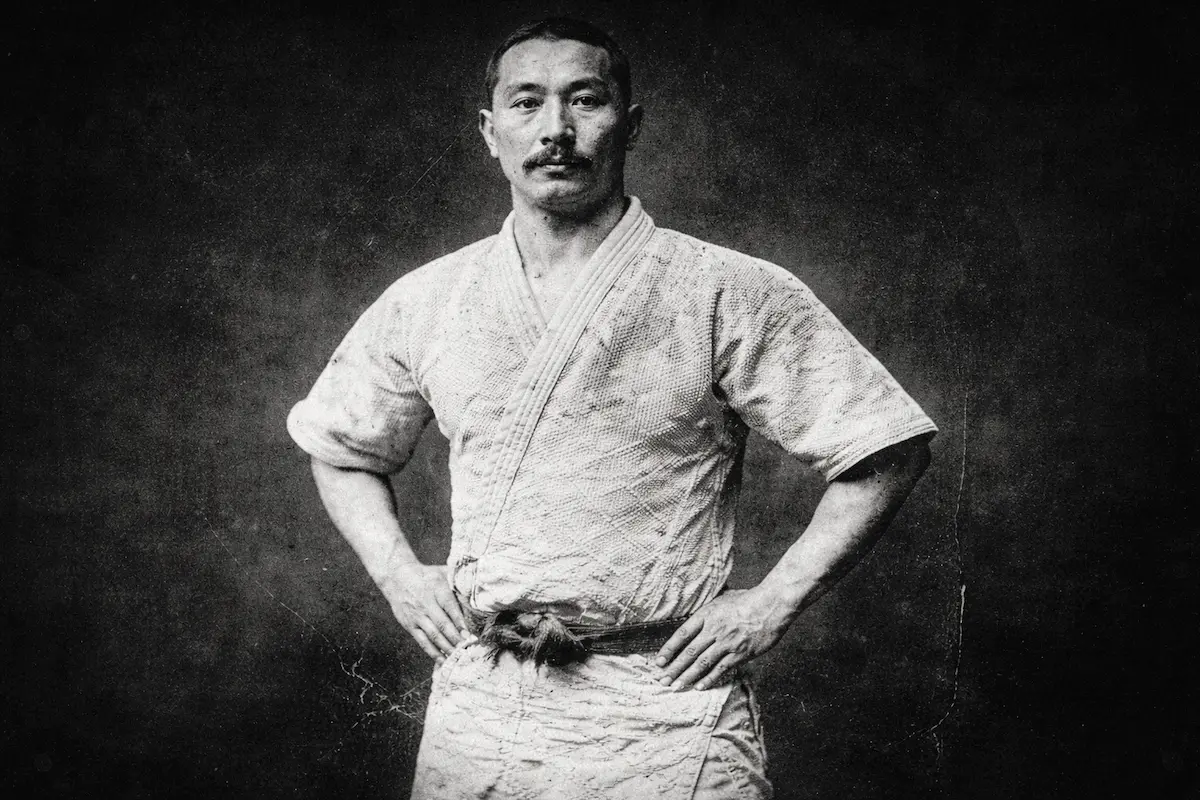
    The story begins with Mitsuyo Maeda, a Japanese judoka who traveled the world taking on challengers to prove the effectiveness of his art. In 1914 he arrived in Brazil.

    There, Maeda’s knowledge reached the Gracie family. Carlos Gracie Sr. took to it immediately and passed what he learned to his brothers.

    In 1925 the family opened its first academy in Rio de Janeiro. That school became the laboratory where Japanese jiu-jitsu was pulled apart and rebuilt into something new.

    How the Gracie Family Changed the Art

    The most important change came from Hélio Gracie, Carlos Sr.’s younger brother. Hélio was small and physically frail, and many of the techniques simply did not work for him against bigger training partners.

    So he changed them.

    Hélio systematically reworked the art around leverage, timing, and positioning instead of strength and speed. The result was a version of Jiu-Jitsu that a smaller person could genuinely use against a larger one — the core principle that still defines the art today.

    That single decision is why Brazilian Jiu-Jitsu became a martial art for ordinary people rather than only for athletes. If you want the technical picture of how it works, read our guide on what Brazilian Jiu-Jitsu is.

    Who Is Carlos Gracie Jr.?

    Carlos Gracie Jr., known to everyone as Carlinhos, was born in Rio de Janeiro on January 17, 1956. He is the son of Carlos Gracie Sr.

    He grew up inside the art, learning from three of its most influential figures: his father, his uncle Hélio Gracie, and his older brother Rolls Gracie — widely considered one of the most creative minds Jiu-Jitsu has produced. Hélio promoted him to black belt in 1977.

    When Rolls died in 1982, Carlos Jr. stepped into the leadership of the family’s Copacabana academy. He carried that responsibility for several years before deciding to build something of his own.

    1986: The First Gracie Barra School

    In 1986, Carlos Gracie Jr. opened his own academy in Barra da Tijuca, a neighborhood on the western side of Rio de Janeiro.

    The name came from the students themselves. People began calling the group the Gracies from Barra — and the name stuck. Gracie Barra.

    The first classes had roughly twenty students. Within a year that number had grown to around two hundred, and the school moved into a larger space to keep up.

    What set it apart was not just the technical level. It was the atmosphere. At a time when many Jiu-Jitsu academies were built around a small circle of tough competitors, Carlos Jr. was building something deliberately open.

    The Idea That Changed Everything: “Jiu-Jitsu for Everyone”

    This is the part of the history that actually affects your first class.

    Carlos Gracie Jr. believed Jiu-Jitsu should not belong only to fighters. He wanted a school where a doctor, a mother of three, a nervous teenager, and a world champion could all train in the same room, safely, and all get what they came for.

    That philosophy — Jiu-Jitsu for Everyone — became the foundation of the entire organization. It shows up in concrete ways:

    • A structured curriculum, so beginners are not thrown into whatever the instructor felt like teaching that day
    • Separated program levels, so a first-week student is not training the same material as a competitor
    • A safety-first culture, where the experienced students are responsible for looking after the new ones
    • Formal etiquette and hierarchy, which sounds strict but exists mainly to protect people on the mats

    The Red Shield became the symbol of that mission — a global community built around brotherhood, integrity, and personal development.

    How Gracie Barra Went Global

    Three things turned a single academy in Rio into a worldwide organization.

    1. Jiu-Jitsu proved itself in public (1993)

    When Royce Gracie won the first Ultimate Fighting Championship in 1993 against much larger opponents, the world got a live demonstration of what leverage-based Jiu-Jitsu could do. Interest exploded, and demand for qualified instruction followed.

    2. Carlos Jr. built the sport’s institutions

    He was not only running a school. He founded the Brazilian Jiu-Jitsu Confederation (CBJJ) in 1994 and went on to found and lead the IBJJF — the sport’s most recognized governing body, responsible for the World Championship and the standardized rules and belt system used globally.

    He also created the publication that became Gracie Magazine, which gave the sport its first real media voice.

    Very few martial arts organizations can say their founder also built the sport’s federation. That is a large part of why Gracie Barra rank carries the weight it does.

    3. He exported instructors, not just a brand

    Carlos Jr. sent trained Gracie Barra black belts abroad to open schools and build careers. In 2005 he founded the Gracie Barra U.S. headquarters in Irvine, California.

    Today Gracie Barra has more than 1,300 schools across six continents, along with a professional development arm — the Gracie Barra Institute — dedicated to training its instructors.

    What Makes a School an Actual Gracie Barra School

    This is worth understanding before you choose any academy, because “affiliated” means very different things at different martial arts brands.

    A Gracie Barra school operates under a defined system:

    • The GB Method — a structured, progressive curriculum used across every school in the network
    • Program levels — GBK for kids, GB1 (Fundamentals), GB2 (Advanced), and GB3, so you always train material matched to your level
    • The ICP — the Gracie Barra Instructor Certification Program, which trains instructors in how to teach, not just what they know
    • GB CompNet — a competition network for students who want to test themselves, with participation always optional
    • Shared standards — uniform, etiquette, and mat culture that stay consistent from Rio to Denver

    The practical benefit: if you start training in Denver and move to another city, you can walk into a Gracie Barra school there and pick up exactly where you left off.

    The Athletes That Came Out of It

    Gracie Barra’s competitive record is one of the strongest in the sport. Athletes developed within the organization include Roger Gracie, widely regarded as one of the greatest of all time; Kyra Gracie, the first woman in the Gracie family to earn a black belt, promoted by Carlos Gracie Jr. in 2005; and champions such as Braulio Estima, Romulo Barral, Marcio Feitosa, Vinicius “Draculino” Magalhães, Otávio Sousa, and Felipe Pena.

    You do not need to compete to benefit from this. It simply means the curriculum you are learning has been pressure-tested at the highest level of the sport.

    How That History Reaches Denver

    Here is the part that matters if you live in Colorado.

    Lineage in Jiu-Jitsu is traceable, teacher to teacher, like a family tree. The line running through Gracie Barra Denver goes:

    Mitsuyo Maeda → Carlos Gracie Sr. and Hélio Gracie → Carlos Gracie Jr. → Prof. Jefferson Moura → Head Prof. Valerio Ubaldini

    Instruction at Gracie Barra Denver is led by Head Professor Valerio Ubaldini. His mentor, Professor Jefferson Moura, is a 6th-degree black belt from Rio de Janeiro and a former World, Brazilian, Pan-American, and European Champion who has developed black belts and students around the world.

    Every instructor on our mats is also certified through the Gracie Barra Instructor Certification Program. That means when you take a beginner class here, you are not getting a watered-down version of the art. You are getting the same structured system taught in Rio de Janeiro, Irvine, and every other Gracie Barra school — delivered by people trained to teach it clearly.

    You can meet our instructors or read more about Gracie Barra Denver before you visit.

    Why Any of This Should Matter to You

    If you are comparing martial arts schools in Denver, history is not nostalgia. It is a practical filter:

    • A traceable lineage tells you who taught your instructor, and who taught them
    • A standardized curriculum tells you your progress will be structured, not improvised
    • Certified instructors tell you your coach was trained to teach, not just to win
    • A global network tells you your rank and progress travel with you
    • A stated philosophy tells you what kind of room you are walking into

    Gracie Barra’s answer to that last point has not changed since 1986. Jiu-Jitsu for Everyone means you belong here whether you are 8 or 58, athletic or completely out of shape, aiming at a world title or just trying to do something good for yourself this year.

    Key Takeaways

    • Gracie Barra was founded in 1986 by Carlos Gracie Jr. in Barra da Tijuca, Rio de Janeiro.
    • The art itself traces to Mitsuyo Maeda’s arrival in Brazil in 1914 and the Gracie family’s first academy in 1925.
    • Hélio Gracie’s rework of the techniques around leverage is what made Jiu-Jitsu practical for smaller people.
    • Carlos Gracie Jr. also founded the sport’s leading governing body, the IBJJF, and the publication that became Gracie Magazine.
    • Gracie Barra now runs more than 1,300 schools worldwide under one shared curriculum and instructor certification program.
    • Gracie Barra Denver is led by Head Professor Valerio Ubaldini, with a lineage running back through Prof. Jefferson Moura to Carlos Gracie Jr.

    Frequently Asked Questions

    When was Gracie Barra founded? Gracie Barra was founded in 1986 by Carlos Gracie Jr. in the Barra da Tijuca neighborhood of Rio de Janeiro, Brazil. It began with about twenty students and grew into a global organization of more than 1,300 schools.

    Who founded Gracie Barra? Carlos Gracie Jr., known as Carlinhos, founded Gracie Barra. Born in 1956, he is the son of Carlos Gracie Sr. and learned the art from his father, his uncle Hélio Gracie, and his brother Rolls Gracie. He also founded the IBJJF, the sport’s leading governing body.

    Where does the name “Gracie Barra” come from? The name comes from Barra da Tijuca, the Rio de Janeiro neighborhood where the first school opened in 1986. Students began referring to the group as the Gracies from Barra, and the name became official.

    What does “Jiu-Jitsu for Everyone” mean? It is Gracie Barra’s founding philosophy: Jiu-Jitsu should be accessible to everyone, not only to competitors. In practice it means a structured curriculum, separate program levels, a safety-first culture, and classes open to all ages and fitness levels.

    How many Gracie Barra schools are there? There are more than 1,300 Gracie Barra schools worldwide, spread across six continents, all operating under the same curriculum, instructor certification standards, and belt system.

    What is the Gracie Barra lineage of the Denver school? The lineage runs Mitsuyo Maeda → Carlos Gracie Sr. and Hélio Gracie → Carlos Gracie Jr. → Prof. Jefferson Moura → Head Prof. Valerio Ubaldini, who leads instruction at Gracie Barra Denver.

    Is Gracie Barra the same as Gracie Jiu-Jitsu? They share the same family origin but are separate organizations. Gracie Barra is the team and school network founded by Carlos Gracie Jr. in 1986, with its own curriculum, instructor certification program, and worldwide structure.

    Do I need to know the history to start training? No. You can book a free first class and learn as you go. The history simply explains why the classes are structured the way they are, and why the same system is taught in every Gracie Barra school.

    Train Where the Lineage Lives

    Gracie Barra Denver teaches Brazilian Jiu-Jitsu and self-defense to adults, teens, kids, and women, using the same curriculum built in Rio de Janeiro and refined across four decades.

    Curious what training actually does for you? Read how Jiu-Jitsu changes your life, or look through our Jiu-Jitsu classes and class schedule.

    📍 [Studio Address], Denver, CO 📞 [Phone] ✉️ [Email]

    Your first class is free. Book your free trial class →

  • Why Jiu-Jitsu Will Change Your Life: A Denver Beginner’s Guide

    Why Jiu-Jitsu Will Change Your Life: A Denver Beginner’s Guide

    Quick answer: Brazilian Jiu-Jitsu changes your life because it trains your body, your mind, and your social life at the same time. It builds real strength and cardio, teaches you to stay calm under pressure, and connects you to a community that trains with you every week. In Denver, it also gives you a consistent, indoor way to stay in shape all year — no matter what the weather is doing outside.

    Most people do not walk into a Jiu-Jitsu school looking to change their life. They walk in because they want to lose a few pounds, learn to protect themselves, or finally do something that is not another treadmill.

    Then, a few months later, something else has happened. They sleep better. They handle stress at work differently. They have five new friends they see every week.

    That is the part nobody tells you about. Here is how it works — and what it looks like at Gracie Barra Denver.

    What Is Brazilian Jiu-Jitsu, Exactly?

    Brazilian Jiu-Jitsu (BJJ) is a martial art built around leverage, timing, and body position instead of size and power. Training happens on the ground, where a smaller person can control and neutralize a larger one using technique.

    It was developed by the Gracie family in Brazil and refined into a system that regular people — not just athletes — can learn step by step. Grand Master Carlos Gracie Jr. built Gracie Barra around that idea: Jiu-Jitsu for Everyone.

    Two things surprise most beginners:

    • There is no striking. No punching, no kicking. You are learning control, not combat.
    • You practice with a partner, not against one. Your training partner is helping you get better, and you are doing the same for them.

    If you want the full breakdown before you start, read our guide on what Brazilian Jiu-Jitsu is. And no — Jiu-Jitsu and MMA are not the same thing.

    How Jiu-Jitsu Changes Your Body

    Jiu-Jitsu is a full-body workout that never feels like a workout. You are too busy solving a problem to notice you have been moving hard for an hour.

    It builds cardio you can actually use

    A single Jiu-Jitsu round pushes your heart rate up, brings it down, then pushes it up again. That interval pattern trains your heart and lungs to recover faster.

    The difference from a machine at the gym is simple: your effort is unpredictable. You cannot set the pace and coast. Your body has to adapt in real time, which is exactly the kind of conditioning that carries over to hiking, skiing, and chasing your kids around the yard.

    It builds functional strength

    Jiu-Jitsu strength is grip, hips, and core. You develop it by using it — bridging, framing, escaping, sweeping — not by isolating one muscle at a time.

    Most students notice the same things in the first two or three months:

    • A grip that does not give out
    • A core that holds position instead of collapsing
    • Hips that can move under load
    • Shoulders and back that feel more stable, not more beat up

    It changes your body composition

    Jiu-Jitsu burns a serious number of calories per session, but that is only part of it. The bigger change is that you keep showing up. A class with people expecting you is far easier to stick with than a solo gym routine.

    Consistency, not intensity, is what changes your body over a year. Jiu-Jitsu is one of the few forms of training that people actually stay consistent with — because it is interesting.

    It improves mobility, balance, and coordination

    You will move in ways you have not moved since you were a kid: rolling, inverting, shrimping, getting up off the floor without using your hands.

    That matters more as you get older. Balance and the ability to fall safely are two of the most practical physical skills an adult can own, and Jiu-Jitsu trains both every single class.

    How Jiu-Jitsu Changes Your Mind

    This is the part that keeps people on the mats for ten years.

    You learn to stay calm under pressure

    In Jiu-Jitsu, someone is on top of you and you have to think clearly anyway. There is no faking it. Either you breathe and solve the problem, or you panic and lose the position.

    After a few months of that, a hard conversation at work does not feel the same. You have practiced being uncomfortable and staying functional. That skill transfers directly.

    Your focus gets sharper

    You cannot check your phone in the middle of a round. You cannot think about your inbox. Jiu-Jitsu demands total attention, which makes it one of the most effective forms of active mindfulness available.

    Many students describe class as the only hour of their day when their brain is completely quiet.

    Stress goes down

    Physical effort burns off stress hormones. Focus interrupts the loop of overthinking. Community gives you people to talk to. Jiu-Jitsu delivers all three in the same hour.

    You will not always feel like going to class. You will almost never regret it after.

    Your confidence becomes real

    There is a difference between confidence you talk yourself into and confidence you earned. Jiu-Jitsu gives you the second kind.

    You know what you can do because you have done it, with someone resisting, in front of witnesses. That quiet certainty shows up in how you walk into a room, how you handle conflict, and how you carry yourself in a parking garage at night.

    You get better at solving problems

    Every round is a puzzle with a person attached to it. You test an idea, it fails, you adjust. Then you test again.

    Over time you stop being afraid of problems you cannot immediately solve. You just start working. That habit is worth more outside the academy than inside it.

    You build resilience

    You will get tapped. A lot. Especially in your first year.

    Jiu-Jitsu teaches you to lose small, often, and without drama — then come back tomorrow and try again. That is the single most useful mental habit anyone can develop, and almost nothing else in adult life teaches it as directly.

    How Jiu-Jitsu Changes Your Social Life

    Adults are not supposed to make new close friends easily. Jiu-Jitsu ignores that rule.

    • Shared difficulty builds fast trust. You struggle next to the same people three times a week. That creates a bond quickly.
    • Respect is built into the culture. You bow, you shake hands, you look after your partner’s safety. It becomes automatic.
    • Everyone is a beginner at something. The purple belt struggling with a new technique is in the same boat you are.
    • Nobody cares what you do for work. On the mats you are just a training partner. It is one of the last genuinely level rooms most adults ever walk into.
    • It can be a family activity. Plenty of parents start after enrolling their child in Jiu-Jitsu for kids and teens and end up training themselves.

    Why Jiu-Jitsu Fits Denver So Well

    Denver sits at 5,280 feet, and that changes the math on training in ways that work in your favor.

    Training at altitude is harder — and that is a feature. Less oxygen per breath means your conditioning is challenged from day one. Denver students who travel to sea-level tournaments and camps regularly notice how much easier the air feels down there.

    Two practical notes for Mile High training:

    • Hydrate more than you think you need. Colorado’s dry air pulls water out of you fast, on and off the mats.
    • Give yourself a few weeks. If you just moved here, expect to gas out sooner than expected at first. It passes.

    It solves the Denver winter problem. Trails ice over, daylight disappears at 4:30, and outdoor routines fall apart in November. A Jiu-Jitsu academy is 75 degrees and open all winter. Your training does not have a season.

    It complements everything else Denver people already do. Skiing, climbing, cycling, and trail running all reward core strength, hip mobility, balance, and the ability to fall without getting hurt. Jiu-Jitsu builds all four.

    We are easy to reach from the north side of the city. Gracie Barra Denver sits on Washington Street, minutes from Globeville, Elyria-Swansea, Sunnyside, Cole, Clayton, and Five Points, with quick access from RiNo, Berkeley, Highland, Thornton, Northglenn, Commerce City, and the rest of Adams County. If you work downtown, you can be on the mats without fighting your way across town.

    What Your First Class at Gracie Barra Denver Looks Like

    Nervous about walking in? Here is exactly what happens.

    1. You arrive about 15 minutes early. Someone at the front desk greets you, shows you around, and answers your questions.
    2. You borrow a uniform. You do not need to buy anything to try a class. Wear shorts and a t-shirt underneath, and leave the jewelry at home.
    3. You warm up with the group. Light movement, nothing dramatic.
    4. You learn one or two techniques. The instructor breaks each one into steps and demonstrates slowly.
    5. You drill with a partner. They will be a more experienced student who has been assigned to look after you. Their job is to make sure you have a good first class.
    6. You watch or take part in live training. Beginners are never thrown into hard rounds on day one. That is not how it works here.
    7. You go home tired and, usually, smiling.

    Every class follows the Gracie Barra method — a structured, step-by-step curriculum used across more than 1,300 schools worldwide. You are not getting a random class. You are getting week one of a system, taught by instructors certified through the Gracie Barra Instructor Certification Program. You can meet our instructors before you come in.

    “But What About…” — The Real Objections

    “I’m not in shape yet.” Nobody is, on day one. You do not get in shape and then start Jiu-Jitsu. You start Jiu-Jitsu and get in shape. You control your own pace, and you can tap out of any round at any time for any reason.

    “I’m too old.” Our adult Jiu-Jitsu classes in Denver include students in their 30s, 40s, 50s and beyond. Technique-based training is exactly what favors older students — you win with position, not with speed.

    “I’m a woman and I don’t want to be the only one.” You will not be. We run women’s Jiu-Jitsu classes and our general classes include women at every belt level.

    “I don’t want to get hurt.” Jiu-Jitsu has no striking, and every submission has a built-in stop signal: the tap. You control when a round ends. Our instructors match beginners with partners who train safely.

    “I don’t have time.” Two classes a week is enough to make real progress. Check the class schedule — we run morning, midday, and evening classes so you can build training around your job, not the other way around.

    “What if I don’t like it?” Then you tried something new for free and you know. Our first class costs nothing and there is no obligation attached to it.

    How to Start This Week

    1. Pick a class time that fits your week on the class schedule.
    2. Book your free trial class at keepnexo.com.br/booking.
    3. Show up 15 minutes early with shorts, a t-shirt, and a water bottle.
    4. If you like it, look at membership options — no long-term contract required.

    Interested in training without the uniform? Ask us about No-Gi training too.

    Key Takeaways

    • Brazilian Jiu-Jitsu uses leverage and technique, not size or strength, which is why it works for regular people.
    • It improves cardio, functional strength, mobility, and body composition — without feeling like a workout.
    • It builds focus, stress control, earned confidence, and resilience through repeated, low-stakes failure.
    • It creates one of the fastest and most durable adult social circles you will find.
    • Denver’s altitude makes training harder, and Denver’s winters make an indoor, year-round routine genuinely valuable.
    • Your first class at Gracie Barra Denver is free, no experience is needed, and a uniform is provided.

    Frequently Asked Questions

    Do I need to be fit before I start Jiu-Jitsu? No. Jiu-Jitsu is how you get fit. Beginners train at their own pace, and you can stop a round at any time. Most students notice better conditioning within the first month or two.

    How many times a week should a beginner train? Two classes a week is enough to progress steadily and build the habit. Three or more accelerates your learning, but consistency over months matters far more than volume in any single week.

    Is Jiu-Jitsu safe? Jiu-Jitsu involves no striking, which removes the main injury risk found in other martial arts. Every submission includes a stop signal — the tap — and you decide when a round ends. Beginners are paired with experienced partners who train with control.

    What is the right age to start Jiu-Jitsu? There is no upper limit. Kids can start around age 4 in our youth program, and adults regularly begin in their 30s, 40s, 50s and later. Because Jiu-Jitsu rewards technique over athleticism, it stays practical for a lifetime.

    What should I wear to my first class? Wear athletic shorts and a t-shirt, and bring a water bottle. Gracie Barra Denver provides a uniform for your trial class, so you do not need to buy a gi before you decide.

    How long does it take to get a blue belt in Jiu-Jitsu? For most adults training consistently, the first belt promotion takes roughly one to two years. Timelines vary by training frequency, attendance, and individual progress — belts in Jiu-Jitsu are earned on the mats, not on a schedule.

    Does training at Denver’s altitude make Jiu-Jitsu harder? Yes, at first. At 5,280 feet there is less oxygen per breath, so newcomers to Colorado often tire faster in their first weeks. Your body adapts, and the payoff is stronger conditioning than you would build at sea level.

    Is Brazilian Jiu-Jitsu good for self-defense? Yes. Jiu-Jitsu focuses on controlling an opponent and neutralizing a threat from close range and from the ground, where many real confrontations end up. It teaches control, distance management, and how to stay calm under physical pressure.

    Train With Us in Denver

    Gracie Barra Denver teaches Brazilian Jiu-Jitsu and self-defense to adults, teens, kids, and women — beginners very much included.

  • How to Wash Your Gi (and Finally Get the Smell Out)

    How to Wash Your Gi (and Finally Get the Smell Out)

    Let’s be honest. Every Jiu-Jitsu student has pulled a gi out of the bag, taken one sniff, and thought: yeah, that’s not happening today.

    Here’s the good news. A stinky gi is a fixable problem, and it’s almost never about how hard you train. It’s about what happens in the 12 hours after class ends.

    At Gracie Barra Denver, a clean gi isn’t a suggestion. It’s a basic sign of respect for the people you roll with. So here’s exactly how to wash yours, how to rescue one that already smells, and a few things Denver’s dry air lets you get away with that people in other cities can’t.

    Why Your Gi Smells (and Why It’s Not the Sweat)

    This surprises most beginners: fresh sweat is nearly odorless.

    The smell comes from bacteria. Your gi picks them up from the mats, your skin, and your training partners. Then you roll it up, stuff it in a gym bag, and leave it in a warm car. That bag is dark, damp, and about body temperature. It’s a perfect little incubator.

    By the time you get home, the bacteria have multiplied and started breaking down the sweat, oil, and dead skin in the fabric. That process is what you’re smelling.

    Over weeks, those bacteria build a thin, sticky layer inside the cotton fibers. That’s why some gis come out of the washing machine looking clean but still smelling faintly sour once they get damp again. The wash removed the dirt. It didn’t remove the buildup.

    Understand that, and everything below makes sense.

    The Step-by-Step: How to Wash Your Gi

    Step 1: Get it out of the bag immediately

    This is the single biggest thing you can do, and it’s free.

    The moment you get home, take the gi out. Hang it over a door or a chair, even if you’re not washing it right away. Air kills the damp environment bacteria need. Ten seconds of effort saves you a whole reset wash later.

    Never leave a gi in your car overnight. In a Denver summer, a closed trunk turns into an oven and bacteria go into overdrive. In winter, freezing doesn’t kill anything, it just presses pause until things warm up again.

    Step 2: Wash within a few hours

    Same day is ideal. If you train at night and the machine isn’t an option, hang it up and wash it first thing in the morning.

    Turn the gi inside out before it goes in. The inside is the side that touched your skin, so that’s where most of the bacteria live.

    Step 3: Cold water, gentle cycle

    Use cold or lukewarm water. Never hot.

    Gi jackets are heavy cotton, and cotton shrinks when it gets hot. Even a gi labeled “pre-shrunk” will keep tightening up if you keep washing it warm. If your sleeves have crept above your wrists, hot water is usually why.

    Cold water still cleans perfectly well. Modern detergents are built for it.

    Step 4: Skip the fabric softener

    This one feels backwards, but it matters.

    Fabric softener works by coating fibers with a waxy film. That film blocks the cotton from absorbing water properly, traps bacteria underneath, and gradually makes the gi hold smells instead of releasing them. Softener is the most common reason a gi gets worse over time.

    Same idea with scented booster beads. They cover the smell instead of removing it, and the smell always wins eventually.

    Step 5: Use less detergent, not more

    Most people use too much. Extra detergent doesn’t rinse out of thick cotton, and the leftover residue feeds bacteria.

    Use about half the amount you’d use for a normal load, or the amount recommended for a light load. If your water at home leaves spots on glasses, you may need a little more, since minerals in the water reduce how well detergent works. Denver Water pulls from two different collection systems, so hardness varies quite a bit depending on which part of the metro you live in.

    Step 6: Add one booster, not three

    Pick one:

    • White vinegar — about half a cup in the rinse cycle. Breaks down detergent residue and neutralizes odor.
    • Baking soda — about half a cup in the wash with your detergent. Helps lift deep-set smells.

    Don’t dump both in at once. They cancel each other out. And never mix vinegar with bleach — that combination releases chlorine gas, which is genuinely dangerous.

    Speaking of bleach: skip it. It weakens cotton fibers, and over time it actually turns white gis yellow instead of whiter.

    How to Rescue a Gi That Already Stinks

    If your gi still smells after a normal wash, you’ve got buildup. A regular cycle won’t fix it. You need a reset.

    Here’s what works:

    1. Fill a tub, sink, or bucket with cold water.
    2. Add one to two cups of white vinegar.
    3. Submerge the gi completely and let it soak for 30 to 60 minutes.
    4. Wring it out and run a normal cold wash with a small amount of detergent and no softener.
    5. Air dry completely before you fold it or pack it.

    One soak usually does it. A gi that’s been neglected for months might need two. If the smell survives a second reset, the fabric has likely absorbed more than it can give back, and it’s time to retire that gi to drilling-only duty.

    A note on drying between wears: damp equals smell. If it’s not bone dry, it’s not clean.

    Drying Your Gi in Denver’s Dry Air

    Living in a semi-arid climate has one real perk, and this is it.

    A gi hung indoors in Denver often dries overnight. In humid cities, people fight mildew for two days. You mostly don’t have to. Use that.

    Do this:

    • Hang the gi on a wide, sturdy hanger or a drying rack, jacket unbuttoned and open
    • Give it airflow — near a cracked window, a fan, or a vent
    • Let the pants hang full length rather than folded over a bar
    • Make sure the collar is completely dry before you fold it, since the collar is thick and dries last

    Avoid this:

    • The dryer, on any heat setting. This is the fastest way to shrink a gi two sizes.
    • Long stretches in direct sunlight. A little sun helps whiten a white gi, but hours of Colorado UV will fade a blue or black gi and weaken the cotton.
    • Folding or bagging a gi that’s still slightly damp. That’s how you undo a good wash.

    If you’re in a hurry, a no-heat or air-fluff dryer setting with a fan is safer than heat. It’s still slower than just hanging it up.

    Don’t Forget the Belt, the Rash Guard, and the Bag

    Your belt. Yes, wash it. The old superstition about washing away your knowledge is a fun story, but your belt sits on the same mats your gi does and picks up the same bacteria. Cold wash, hang dry, no bleach. Your teammates will thank you.

    Rash guards and spats. These are synthetic, so they hold odor far more stubbornly than cotton. Wash them cold, inside out, and never with fabric softener. If you train no-gi, this gear needs washing after every single session, no exceptions. Want a full breakdown of the differences? We covered gi vs. no-gi gear here.

    Your gym bag. It’s the crime scene. Empty it out after every class, leave it open to air, and wipe the inside with a vinegar-water mix once a month. A clean gi in a dirty bag doesn’t stay clean.

    How Often Should You Wash Your Gi?

    After every single session. There’s no version of this where wearing it twice is fine.

    That’s non-negotiable at any legitimate Jiu-Jitsu academy, and it’s about more than smell. Mat-borne skin infections like ringworm and staph spread through unwashed gear. Washing after every class protects you and everyone you train with.

    Which raises the practical question most students hit around month two: what if you train four or five times a week?

    Get a second gi. It’s the best gear purchase you’ll make after your first one. A two-gi rotation means you’re never rushing a wash, never wearing something half-dry, and each gi lasts noticeably longer because it gets a full recovery day between sessions.

    Beginners often skip this and then wonder why their only gi wore out in a year.

    Clean Gear Is Part of the Culture Here

    At Gracie Barra Denver, mat hygiene is part of how we train, not an afterthought. Alongside a clean gi, we ask students to:

    • Trim fingernails and toenails before class
    • Wear sandals off the mat, always
    • Shower before training when you’re coming straight from work
    • Cover any cut, scrape, or skin condition before stepping on

    None of this is complicated. It’s just what it looks like when a room full of people take care of each other.

    If you’re brand new and worried about getting all this right, don’t be. We lend clean uniforms to first-time students, and our instructors walk you through the gear basics on day one. Nobody expects you to arrive knowing this stuff.

    Come Train With Us in Denver

    Whether you’re just starting out or coming back after a long break, there’s a spot for you on our mats. We run Jiu-Jitsu classes for adults at every level, from total beginner to advanced, mornings and evenings.

    📍 4495 Washington St, Denver, CO 80216 — easy to reach from I-70 and I-25 🥋 Uniform provided for your first class 🧑‍🏫 Certified instructors, structured curriculum, no ego on the mats 🎯 Your first class is free

    👉 Book your free trial class here.

    FAQ: Washing and Caring for Your Jiu-Jitsu Gi

    How do I wash a gi so it doesn’t shrink?

    Wash it in cold water on a gentle cycle and air dry it. Heat is what causes shrinkage, so avoid hot water and skip the dryer entirely. Even a pre-shrunk gi will keep shrinking if it’s washed warm and machine-dried.

    Why does my gi still smell after washing it?

    Bacteria have built up inside the cotton fibers, and a normal cycle doesn’t reach them. Soak the gi in cold water with one to two cups of white vinegar for 30 to 60 minutes, then run a regular cold wash with a small amount of detergent and no fabric softener.

    Can I put my gi in the dryer?

    We don’t recommend it. Dryer heat shrinks cotton and weakens the fibers over time. Air drying is better for the gi and takes surprisingly little time in Denver’s dry climate — most gis hung indoors are dry by morning.

    Should I wash my Jiu-Jitsu belt?

    Yes. The idea that washing a belt washes away your progress is a myth. Your belt collects the same mat bacteria as the rest of your gear. Wash it in cold water and hang it to dry.

    How often should I wash my gi?

    After every training session, without exception. It’s a hygiene standard at every reputable academy and it helps prevent mat-borne skin infections. If you train several times a week, a second gi makes this much easier.

    Do I need my own gi for my first class at Gracie Barra Denver?

    No. We lend a clean uniform to first-time students, so all you need to bring is comfortable clothes to wear underneath and a water bottle. You can book a free trial class here whenever you’re ready.


  • Kids’ Jiu-Jitsu in Denver: 7 Myths Parents Believe, and the Truth Behind Them

    Kids’ Jiu-Jitsu in Denver: 7 Myths Parents Believe, and the Truth Behind Them

    If you’ve been searching for kids jiu jitsu near me here in Denver, you probably have a few questions. And maybe a couple of worries, too.

    That’s completely normal. Signing your child up for a martial art feels like a big decision. You want something safe. Something structured. Something your kid actually looks forward to on a Tuesday afternoon.

    Here’s the short version: most of the scary stories parents hear about Brazilian Jiu-Jitsu for kids simply aren’t true. At Gracie Barra Denver, we hear the same seven myths almost every week. So let’s walk through them, one at a time.

    Myth #1: “Jiu-Jitsu will turn my kid into a fighter”

    The truth: Jiu-Jitsu teaches control, and control is the opposite of aggression.

    This is the number one worry we hear from Denver parents. It makes sense. The word “martial art” sounds like fighting.

    But Brazilian Jiu-Jitsu is built on leverage and technique, not on hitting people. Kids learn how to stay calm when someone is bigger, stronger, or louder than they are. That skill changes how they handle the playground, the bus, and the group chat.

    In our kids’ classes, students practice:

    • Staying calm when things get uncomfortable
    • Solving a problem with position instead of force
    • Setting boundaries with words first
    • Walking away without feeling like they lost

    Most parents tell us the same thing after a month or two: their child argues less at home. Confident kids don’t need to prove anything.

    Myth #2: “The mats are too rough. My child will get hurt”

    The truth: there is no punching or kicking in Brazilian Jiu-Jitsu.

    That one sentence surprises a lot of families. Unlike striking arts such as boxing, karate, or taekwondo, BJJ is a grappling art. Everything happens through grips, balance, and control on the ground.

    Kids also learn how to fall safely in the very first weeks, which is a skill that protects them at recess, at the skate park, and on their bike.

    At our Denver school:

    • Every drill is supervised by a certified instructor
    • Practice rounds are light, slow, and matched by size and age
    • Kids train with classmates at their own level, never with adults
    • Our instructors are background checked, CPR-certified, and trained through the Gracie Barra Instructor Certification Program

    Compare that to soccer, football, or basketball, where kids sprint into each other at full speed. Jiu-Jitsu is one of the safest youth sports a child can pick.

    Myth #3: “My kid isn’t athletic. Or too shy. Or way too wild”

    The truth: Jiu-Jitsu works for every kind of kid, and that’s the point.

    You do not need a naturally sporty child. Most of the kids who walk through our doors have never finished a season of anything.

    Quiet kids find a place where nobody yells and progress is personal. High-energy kids finally get to burn it all off with structure around it. Kids who learn differently do well here too, because instructions are short, visual, and repeated.

    Our coaches focus on:

    • One small technique at a time, broken into steps
    • Effort over perfection
    • Praise for showing up, not just for winning
    • Small wins that stack into real confidence

    We’ve watched shy Little Champions turn into kids who introduce themselves first. It happens more often than you’d think.

    Myth #4: “Jiu-Jitsu is a boys’ sport”

    The truth: girls belong on the mats, and they do great here.

    Martial arts used to have a boys-only reputation. That’s fading fast, in Denver and everywhere else.

    Jiu-Jitsu is actually the martial art that makes the most sense for girls, because it was designed for a smaller person to control a bigger one. Technique beats size. That’s the whole idea.

    Girls in our program learn:

    • How to protect themselves if someone grabs them
    • How to hold their ground without shouting or hitting
    • That their body is capable, not fragile
    • That strength is a skill you build, not something you’re born with

    Many of them keep training into their teens, and some move on to our women’s Jiu-Jitsu classes later. It’s a nice path to be on.

    Myth #5: “My kid is already 12. Isn’t it too late to start?”

    The truth: ages 10 to 15 is one of the best windows there is.

    Younger is not always better. Our Tiny Champions program starts at age 3, sure, but teens pick up Jiu-Jitsu fast because they can understand the why behind a move.

    Middle school and high school are also when kids need this most. Social pressure gets heavier. Screens get louder. A structured training space with older role models is worth a lot right about then.

    Our Juniors and Teens classes give students:

    • Real technique taught step by step, not just conditioning
    • A team of peers who share the same values
    • A healthy way to handle stress and frustration
    • Habits that show up in homework and in how they treat people

    Starting at 12, or 14, is not late. It’s just the right time for that kid.

    Myth #6: “It’s a phase. They’ll quit in a month”

    The truth: the belt and stripe system is built to keep kids interested.

    Kids quit activities when nothing seems to change. Jiu-Jitsu solves that with a clear, visible path.

    Every student can see where they are and what’s next. Stripes come before belts. Belts come before the next belt. Progress is earned, so it feels real.

    Under the hood, they’re building:

    • Focus and attention span
    • Patience with slow progress
    • Respect for coaches, teammates, and rules
    • The habit of finishing what they start

    Gracie Barra uses the same structured curriculum in more than 1,000 schools worldwide, created under Master Carlos Gracie Jr. Your child isn’t guessing what comes next, and neither are we.

    Myth #7: “Our schedule and our budget can’t take one more thing”

    The truth: two classes a week is enough, and the first one is free.

    We know Denver families are stretched. Between school pickup, work, and traffic on I-70, adding an activity sounds exhausting.

    That’s why our kids’ class schedule runs on weekday afternoons and Saturday mornings. Twice a week is plenty to see real progress. You don’t need to buy a uniform to try it, either. We lend your child a clean gi for the first class.

    And the payoff tends to spread out:

    • Better behavior at home and in the classroom
    • Real physical activity that isn’t a screen
    • Friendships built on respect instead of status
    • A calmer, more confident kid at dinner

    For a lot of families, this ends up being the activity that makes the rest of the week easier.

    What Makes Gracie Barra Denver Different

    Gracie Barra is not just a gym. It’s a global Jiu-Jitsu team with a shared curriculum, shared standards, and a shared philosophy: Jiu-Jitsu for Everyone.

    At our Denver location, that looks like:

    • Age-specific programs from ages 3 through 15, so your child always trains with kids at their level
    • An anti-bullying curriculum built into regular class time
    • Certified instructors who know every student by name
    • Clean, padded mats and a family-friendly space where parents are welcome to watch

    Your child won’t get lost in a crowd here. That’s a promise we take seriously.

    Book Your Child’s Free Trial Class in Denver

    If you’ve been looking for Jiu-Jitsu classes for kids in Globeville, Elyria-Swansea, Sunnyside, RiNo, Five Points, Cole, Clayton, Park Hill, Commerce City, or Thornton, now’s a great time to come see the mats for yourself.

    No gear needed. No experience needed. No pressure.

    📍 4495 Washington St, Denver, CO 80216 — easy to reach from I-70 and I-25 👧 Ages 3 to 15 welcome 🧑‍🏫 Certified, background-checked instructors who specialize in kids 🧼 Clean, safe, family-friendly facility 🎯 The first class is always free

    👉 Book your child’s free trial class here.

    FAQ: Kids’ Jiu-Jitsu in Denver

    1. What age can my child start Jiu-Jitsu at Gracie Barra Denver?

    Kids can start at age 3 in our Tiny Champions program. From there, students move into Little Champions (ages 5–9) and Juniors & Teens (ages 10–15). Each group trains with kids at the same age and skill level.

    2. What should my child wear to their first class?

    Comfortable athletic clothes work fine for the first visit, like a T-shirt with shorts or leggings. We’ll lend your child a clean uniform (gi) so they get the full experience. You can read more about gi and no-gi gear here.

    3. Is Brazilian Jiu-Jitsu safe for young children?

    Yes. There’s no striking in Jiu-Jitsu, so no punches or kicks. Kids learn to fall safely from day one, practice rounds are light and supervised, and students are always matched by age and size.

    4. How many times a week should my child train?

    Two classes a week is enough for steady progress. Kids who train three times a week usually move a little faster, but consistency matters more than volume at this age.

    5. My child is really shy. Will they be okay?

    Absolutely. A lot of our students start out nervous. Our instructors are used to it, and the class structure gives shy kids a predictable routine and a partner to work with. Most kids relax within the first ten minutes.